


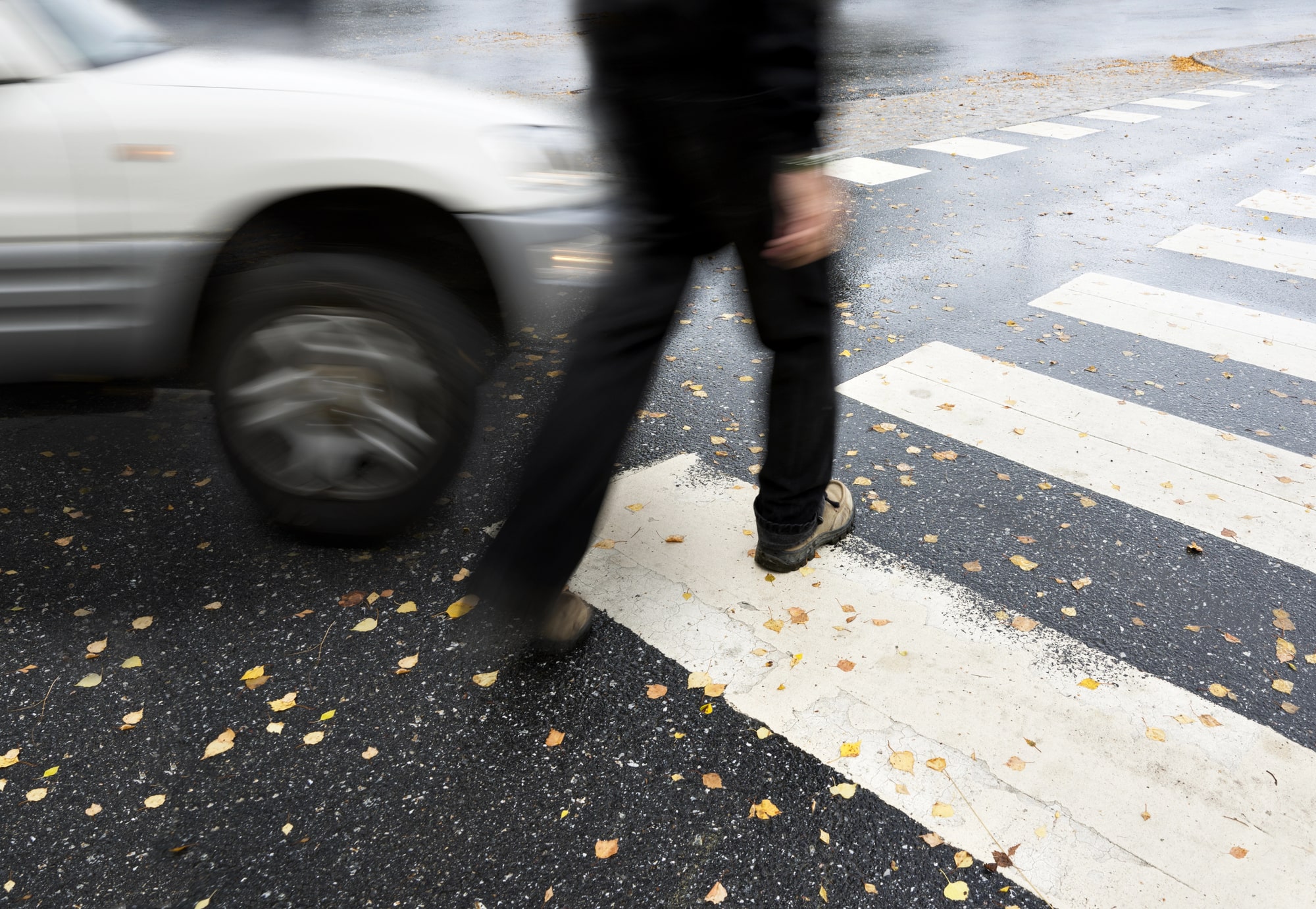
Intersections are where the majority of serious pedestrian accidents happen. They’re where pedestrian and vehicle paths cross, where traffic signals and crosswalk laws create obligations for both drivers and pedestrians, and where fault arguments from insurance companies are most aggressively developed. For Perry area pedestrians injured at an intersection, understanding how Iowa law evaluates fault, and how those evaluations affect compensation, is foundational to protecting a claim.
What Obligations Do Iowa Drivers Have at Intersections Involving Pedestrians?
Iowa traffic law places significant obligations on drivers around pedestrians at intersections. Under Iowa Code Section 321.327, drivers must yield the right of way to pedestrians crossing within a marked crosswalk or within an unmarked crosswalk at an intersection. The law also prohibits drivers from passing another vehicle that has stopped at a crosswalk to yield to a pedestrian.
Drivers who fail to yield, who run red lights or stop signs, who turn without checking for pedestrians in the crosswalk, or who are driving too fast to stop safely create liability when those failures cause a pedestrian injury. When any of these violations is established through evidence, it supports a negligence per se argument that the driver’s conduct was unreasonable as a matter of law.
What Obligations Do Iowa Pedestrians Have at Intersections?
Pedestrian rights aren’t unlimited under Iowa law. Iowa Code Section 321.328 requires pedestrians crossing at intersections to follow applicable traffic control signals. A pedestrian who crosses against a red signal, steps into traffic without looking, or darts into a crosswalk when vehicles can’t safely stop has violated their own traffic obligations.
Iowa Code Section 321.329 addresses pedestrian behavior at locations other than crosswalks. When crossing outside a marked crosswalk, pedestrians must yield the right of way to vehicles.
Insurance companies defending at-fault drivers focus intensely on pedestrian traffic law compliance. Any deviation from the applicable rules becomes a fault argument, and in Iowa’s comparative fault system, those arguments directly reduce what the injured pedestrian can recover.
How Does Iowa’s Comparative Fault System Apply to Intersection Pedestrian Accidents?
Iowa follows a modified comparative fault framework under Iowa Code Section 668.3. When both the driver and the pedestrian contributed to the accident, fault is allocated between them as a percentage. The pedestrian’s recovery is reduced by their own percentage of fault.
A Perry pedestrian found 20% at fault for an intersection accident that caused $250,000 in damages recovers $200,000 after the reduction. The critical threshold is 51%: if the pedestrian’s fault reaches or exceeds 51%, recovery is barred entirely under Iowa’s modified system. That single percentage point makes an enormous difference in a serious injury case, which is why insurance companies pursue fault attribution against injured pedestrians so aggressively.
A Perry pedestrian accident lawyer builds the evidentiary record that establishes where fault actually lies rather than accepting the narrative an insurer constructs to minimize its payout.
What Evidence Determines Fault in Iowa Intersection Pedestrian Cases?
Fault allocations aren’t made in a vacuum. They’re built from evidence, and the evidence available at an intersection crash often includes multiple sources:
- Traffic signal timing records showing what lights were active at the moment of impact
- Surveillance footage from traffic cameras or nearby businesses capturing the seconds before the crash
- Dashcam recordings from other vehicles at or near the intersection
- Witness statements from people who observed the collision or the pedestrian’s and driver’s behavior leading up to it
- Police reports documenting the officers’ observations and any citations issued
- Skid mark analysis and physical evidence from the scene establishing vehicle speed and braking
- Cell phone records when driver distraction is suspected
This evidence deteriorates or disappears quickly. Surveillance footage gets overwritten. Witnesses become harder to locate. Physical evidence at the scene changes as traffic patterns resume and weather affects the roadway. Acting quickly to identify and preserve intersection evidence is one of the most important steps in an Iowa pedestrian accident case.
What Happens When There Is No Marked Crosswalk at the Perry Intersection?
Not every intersection in Perry has a marked crosswalk with painted lines. Iowa law recognizes the concept of an unmarked crosswalk at intersections, extending yield obligations to drivers even when no painted markings exist. An unmarked crosswalk exists at the extension of the sidewalk or the edge of the roadway at any intersection of two public roads.
Drivers who argue the absence of painted markings means they had no obligation to yield to a pedestrian crossing at an intersection are incorrect under Iowa law. The right of way protections extend to unmarked crosswalk areas, and a driver who failed to yield at an unmarked intersection crossing has violated the same legal obligation as one who ran through a marked crosswalk.
How Does Having a Perry Pedestrian Accident Lawyer Change the Outcome?
Insurance companies negotiate based on what they believe a jury would conclude about fault. When a pedestrian is unrepresented, adjusters have more latitude to characterize the facts favorably for the insurer. When legal representation is in place from the beginning, the dynamic changes. Evidence gets preserved. Fault arguments get challenged with documentation rather than accepted as given. The insurer knows that a credible trial threat exists if negotiations produce inadequate offers.
Law Group of Iowa brings over 60 years of combined experience to Iowa pedestrian accident cases throughout Dallas County and the state, including a founding partner with prior insurance claims adjuster experience who understands precisely how carriers build and defend fault arguments. If you were struck at an intersection in Perry and want to understand how Iowa law evaluates your situation, reach out to a Perry pedestrian accident lawyer to discuss the evidence and find out where fault actually lies in your case.